

Professional Stage Equipment Container Loading Process for Mexico Project Delivery
Today’s shipment includes stage platforms, tent structure materials, Layher scaffolding systems, and various stage accessories prepared for delivery to Mexico.
The cargo is loaded into a 40HQ container with a total shipment volume of approximately 20 tons and 68 CBM.
This shipment is an additional restocking order from one of our long-term international clients.
Warehouse Preparation Before Container Loading
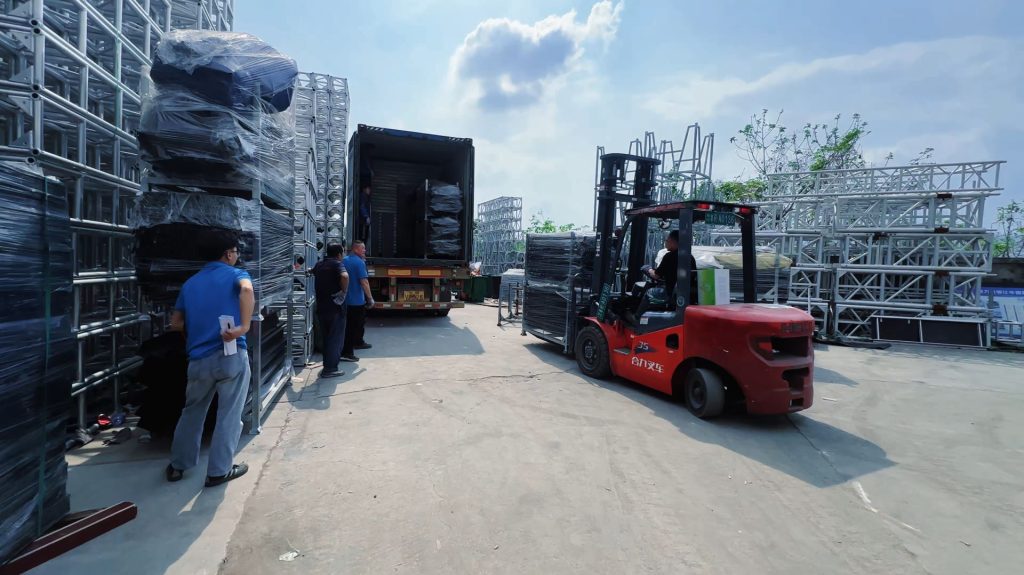
Before the container arrives, our warehouse team has already completed the packaging, sorting, and classification of all equipment.
Each category of cargo is arranged according to size, weight, and loading sequence to improve loading efficiency and reduce unnecessary handling during the container loading process.
At the same time, dedicated shipping staff carefully check every item against the packing list during loading.
In addition, the sales manager responsible for the customer also stays on-site throughout the loading process to double-check the shipment and ensure there are no mistakes or missing items.
This dual inspection process helps guarantee accuracy for international project deliveries.
Efficient Loading Starts Immediately After Container Arrival
Once the 40HQ container arrives, the forklift operators and loading crew immediately begin working.
The loading process follows a clear strategy:
- Large cargo first
- Heavy cargo positioned carefully
- Small gaps reserved for later optimization
- Weight distribution balanced throughout the container
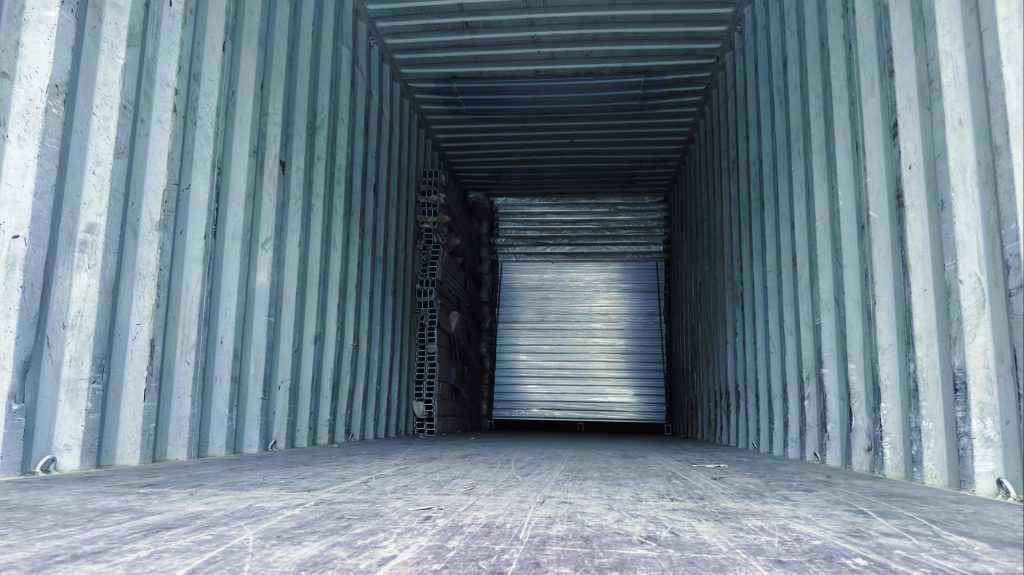
When loading large stage platforms, the cargo must be placed tightly against the innermost wall and the right side of the container.
This is extremely important because large empty gaps can allow cargo movement during sea transportation, increasing the risk of shaking, impact, or equipment damage.
As the container reaches around one-third capacity, the loading team begins filling the side gaps with smaller equipment and accessories.
This step is critical.
If these gaps are not utilized early enough, there will not be enough operating space later in the loading process.
Our loading crew focuses on maximizing every inch of container space to help customers avoid wasted shipping capacity.
By the 42-second mark in the video, approximately half of the stage platforms have already been loaded, while the left-side gaps have also been fully utilized.
At this point, nearly one-third of the container space has already been efficiently occupied.
Experienced Forklift Operators Improve Loading Efficiency
An experienced forklift operator plays a major role in professional container loading.
From around the 50-second mark in the video, viewers can clearly see the stability, positioning accuracy, and smooth operation of our forklift driver.
Precise forklift control helps improve loading speed while reducing the risk of cargo collision or improper positioning inside the container.
Loading Heavy Layher Scaffolding Systems
After the stage platforms are loaded, the next step is loading the Layher scaffolding systems.
Because Layher systems are made of steel, they are significantly heavier than aluminum stage components.
During this stage, cargo protection becomes especially important.
When loading heavy metal equipment, isolation boards should always be placed between different types of cargo.
In addition, if the equipment is placed directly on the container floor, wooden boards or protective packing fabric should be used underneath.
These protective measures help prevent:
- Cargo collision
- Paint damage
- Surface scratches
- Structural deformation caused by friction during transportation
To protect the aluminum stage platforms from impact during shipping, isolation boards are also placed between the Layher frames and the stage platforms.
Even if the container experiences movement during transportation, the cargo will not directly collide with each other.
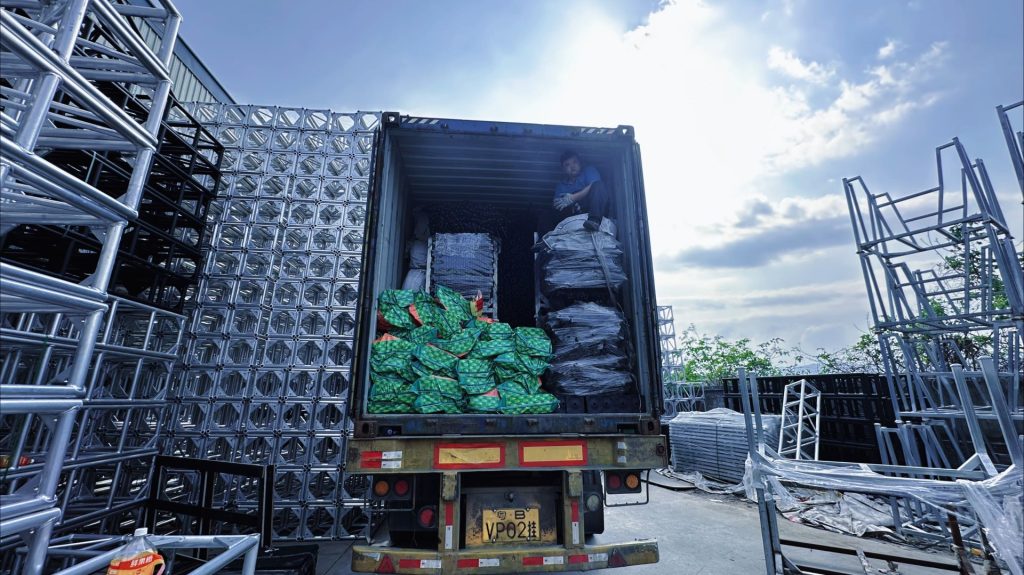
After loading four frames of Layher scaffolding, the container is already close to full capacity.
At this stage, large cargo can no longer fit inside the remaining spaces.
So how can the remaining cargo still be loaded efficiently?
The answer is experience.
The loading team dismantles larger grouped cargo and carefully inserts individual components into the smaller remaining spaces throughout the container.
This method allows the team to fully utilize the remaining space and maximize shipping efficiency for the customer.
More Than Container Loading
Professional container loading is not simply about placing cargo into a shipping container.
It reflects logistics experience, teamwork, cargo protection knowledge, and understanding of international transportation requirements.
For international stage projects, efficient container loading directly affects transportation safety, shipping costs, and project delivery reliability.
What Happens After Container Loading?
Container loading is only one part of the international delivery process.
After the loading is completed, the container still needs to go through container sealing, transportation to the port, export customs clearance, and international shipping procedures before finally arriving at the customer’s project site.
In our upcoming blog articles, we will continue sharing the next stages of the shipment process, including:
- Container sealing procedures
- Cargo transportation to the port
- Export customs clearance workflow
- International logistics coordination
- Overseas project delivery process
Follow our website to see how professional stage equipment is delivered from the factory to international event locations around the world.